Home›Blog›What Colorado Homeowners Should Check Before Freeze-Thaw Season
What Colorado Homeowners Should Check Before Freeze-Thaw Season
October 2026 · Maintenance · 6 min read
Blog
Article Summary
Before Colorado’s freeze-thaw season gets going, a short walk around your property can help you notice changes in water, concrete, and movement. What you see is information, not a diagnosis — and it tells you whether a professional evaluation is the right next step.
Before Colorado’s freeze-thaw season gets going, take a walk around your property. Not to diagnose your foundation from the sidewalk. Just to notice what has changed.
Most homeowners searching for what to check around the house before freeze-thaw in Colorado are not trying to name a repair. They want to know whether anything is different this year.
Why take a walk around the property before freeze-thaw season?
Freeze-thaw cycles, snowmelt, and shifting soil moisture do their work slowly and mostly out of sight. A seasonal walk is how you catch the visible part early, while it is still easy to document. The goal is observation, not conclusions.
Keep it simple and repeatable:
Walk the full perimeter of the house, not just the front.
Look at the ground first, then the concrete, then the structure.
Take photos from the same angles each time.
Note the date and the weather conditions when you looked.
Where does water go when rain and snowmelt reach the ground?
Start with water. When rain or snowmelt reaches the ground around your home, where does it actually go?
Walk the perimeter and look for:
Pooling near the foundation — standing water or damp, low spots against the wall.
Downspouts that empty too close to the structure — discharge landing within a foot or two of the foundation.
Soil that slopes toward the house — ground that has settled or been regraded over time so water runs inward.
Water collecting beside a retaining wall — saturated soil or a persistent wet line along the base.
None of those observations is a verdict. They simply tell you where water is concentrating, which is useful information heading into freeze-thaw season.
If grading or roof runoff looks like the pattern on your property, soil grading and water redirection and gutter services are the kinds of work that get considered — after an evaluation, not before.
What should you look for in walkways, patios, driveways, and steps?
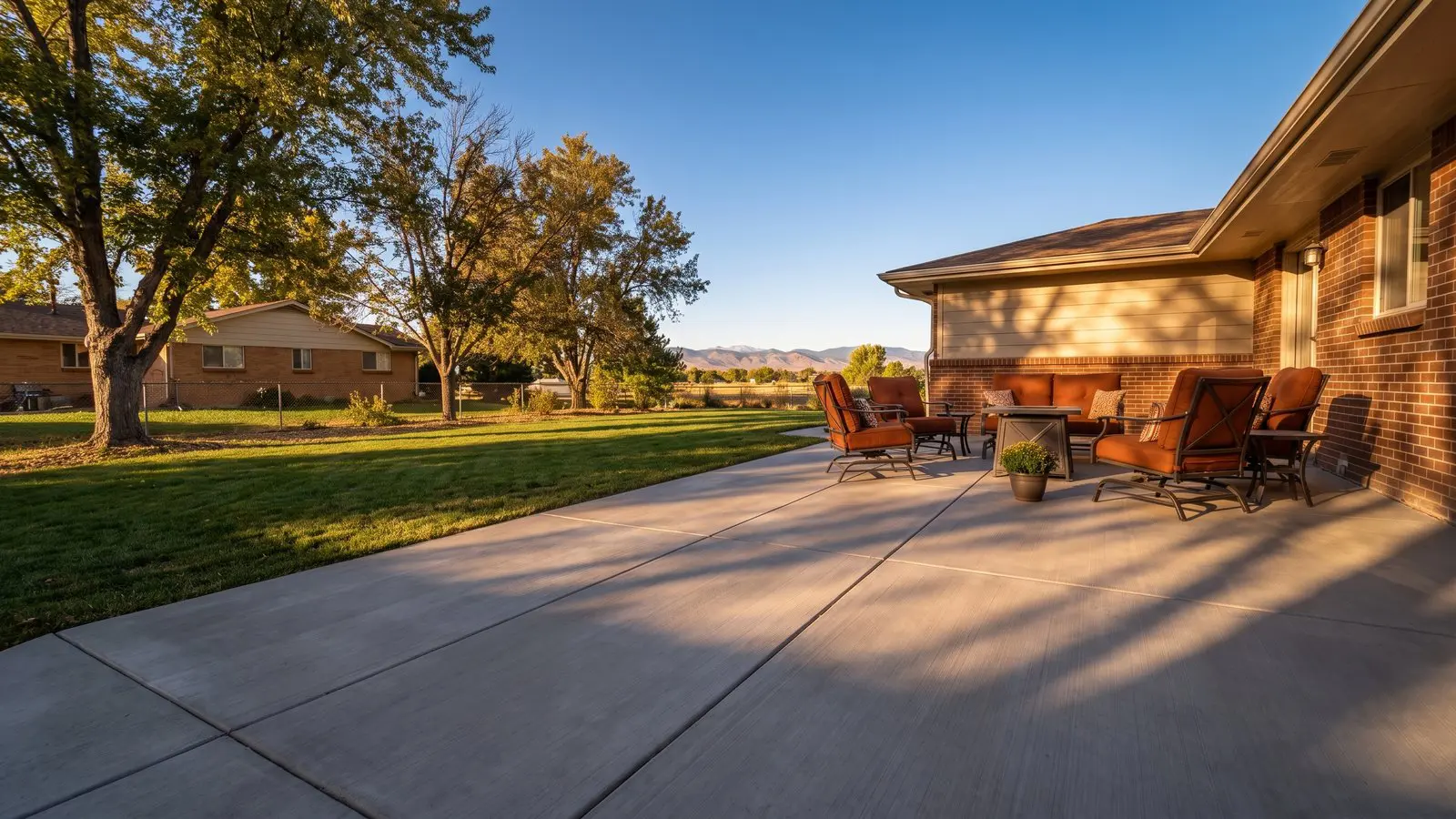
Next, look at the concrete. Is a walkway, patio, driveway, or step sinking?
Uneven concrete matters for two practical reasons: it creates trip hazards, and it changes where water sits and runs.
Here is the part worth repeating: uneven concrete does not automatically mean replacement is the only option. Depending on what the evaluation finds, concrete leveling and lifting or a similar approach may address the settlement without tearing out and repouring the slab.
“Symptoms are information, not a diagnosis. Our job is to understand what is moving and why before anyone talks about a repair.”
Then look for movement. These are the observations worth writing down:
New or changing cracks — in foundation walls, concrete, or masonry. Change over time is more meaningful than width alone.
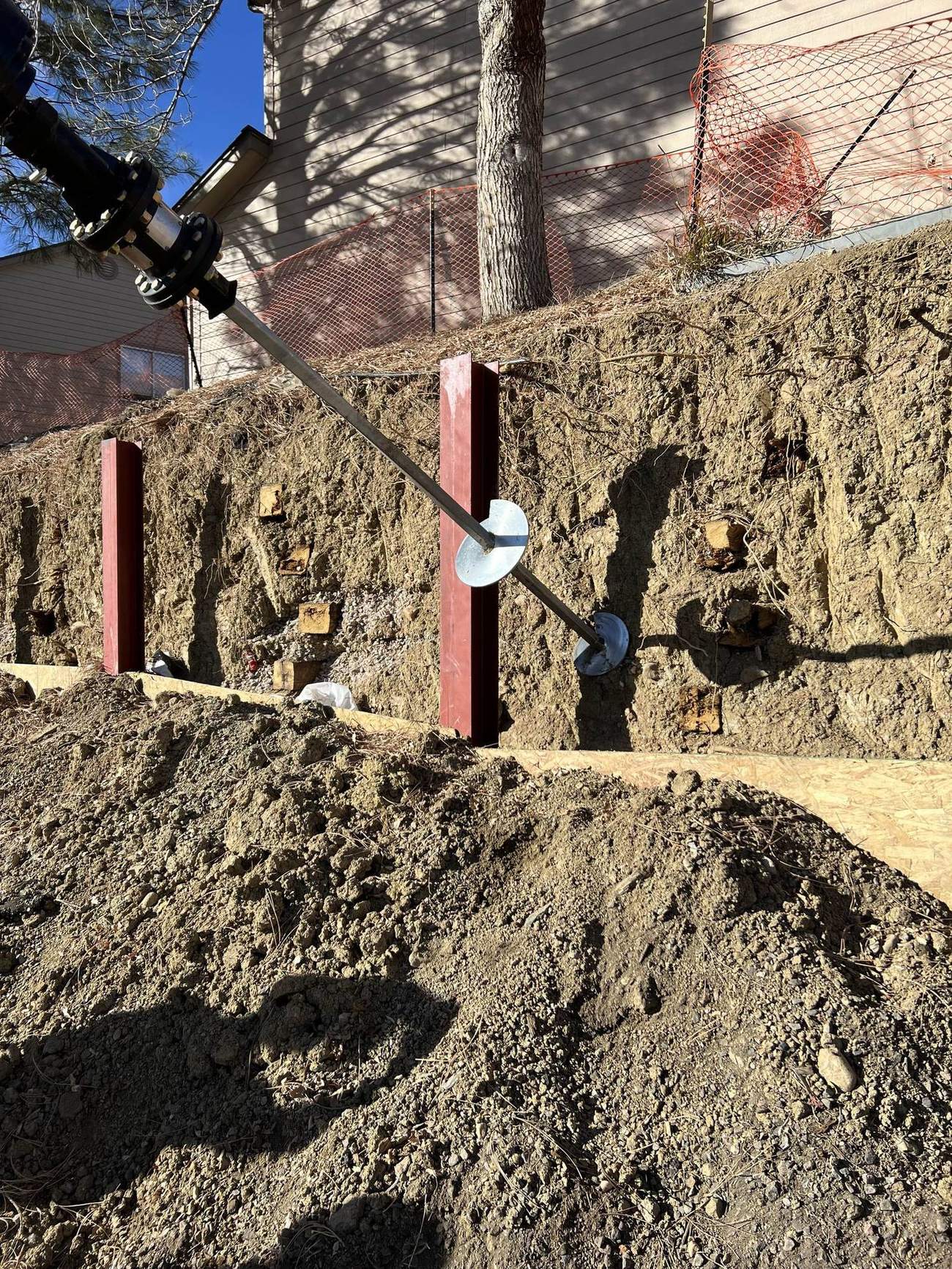
A retaining wall that is leaning or separating — bulging, tilting, or gaps opening between blocks or panels.
Doors or windows that suddenly operate differently — sticking, rubbing, or latching poorly when they used to work fine.
Again: these signs are information, not a diagnosis. A stable hairline crack and a crack that has widened since summer are not the same observation, and a professional will treat them differently.
Why can the same symptom have different causes in Colorado?
Colorado properties deal with expansive soils, moisture changes, and freeze-thaw cycles. Soils that swell when wet and shrink when dry put different pressures on a structure than stable soils do.
That is why the same symptom can have different causes. A sinking step, a damp foundation wall, or a sticking door can each trace back to grading, roof drainage, soil behavior, the way the structure was built, or the history of the property.
It is also why guessing from an internet photo does not work. A useful answer connects the symptom to the specific property, which is the point of a foundation inspection and the reason we look at foundation issues in Colorado homes in context rather than in isolation.
What is the useful next step after your walk?
The useful next step is not guessing. It is three straightforward actions:
Document what you see — photos, dates, and short notes in one place.
Note whether it is changing — compare against the same angle a few weeks later.
Get a professional evaluation if the concern is growing or affecting how the property functions.
That last condition is the filter. Not every observation needs work before winter, and we do not make the recommendation bigger than the problem.
The Foundation Guys serves homeowners across the Denver metro with foundation, concrete, drainage, and retaining-wall work. We start by understanding what is moving and why, then explain the options that fit the problem — you can read what other Colorado homeowners say about that approach.
If you want a clear plan before freeze-thaw weather arrives, schedule an evaluation and request a free estimate. If a recommended project is larger than you expected, you can also ask about financing options for qualified homeowners.
Frequently Asked Questions
What should Colorado homeowners check before freeze-thaw season?
Walk the full perimeter and look at three things: where rain and snowmelt go, whether concrete has settled, and whether cracks, retaining walls, doors, or windows have changed. Photograph and date what you find.
Does a new crack mean my foundation needs repair?
Not automatically. A crack is a symptom, and the same symptom can have different causes depending on the structure, drainage, soil, and history of the property. Whether it is changing matters more than whether it exists.
Does uneven concrete have to be replaced?
No. Uneven concrete can create trip hazards and drainage problems and is worth evaluating, but replacement is not the only option. Leveling or lifting may address the settlement, depending on what the evaluation finds.
Why does drainage come up in a foundation conversation?
Because water changes soil conditions. Pooling near the foundation, downspouts discharging too close to the structure, ground sloping toward the house, or water collecting beside a retaining wall all belong in the evaluation.
When should I schedule a professional evaluation?
Schedule one when a concern is growing or affecting how the property functions – a crack that is widening, water that keeps collecting in the same spot, a wall that is leaning, or a door that no longer closes properly.
H
The Foundation Guys. Family-owned. Serving Lakewood, Littleton, Golden, and the Denver metro since 2013. (720) 359-1386.
Foundation Trouble Right Now?
Settlement, water in the basement, or a wall that moved — call us. Clear next steps, no runaround.
Where Strength Meets Reliability. Foundation repair, basement waterproofing, concrete, and retaining walls across Lakewood, Littleton, Golden, and the Denver metro. Fully insured · Family-owned since 2013 · Financing via Hearth. Hablamos Español.