
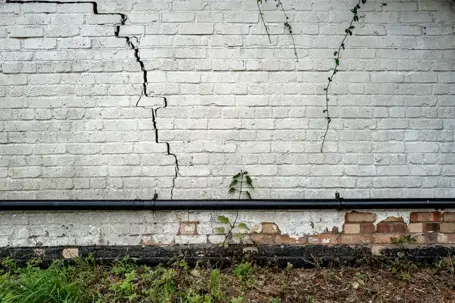
Living in the Lakewood area means dealing with Colorado’s notorious expansive clay soils and unpredictable freeze-thaw cycles. These environmental factors put immense pressure on your home’s structure, often resulting in visible wall cracks that leave homeowners wondering if their property is still safe. While some thin fissures are merely aesthetic signs of a house settling over time, others serve as urgent warnings of shifting foundations or hydrostatic pressure.
Understanding which gaps require a simple patch and which demand professional intervention is the first step in protecting your most valuable investment.
Understanding Structural Warning Signs
Not all foundation damage looks the same, but certain patterns indicate that the soil surrounding your home is winning the battle against your concrete. Identifying these issues early can prevent a minor moisture problem from turning into a total structural failure.
1. Horizontal Cracking Along Foundation Blocks
One of the most serious red flags is a horizontal crack running along the midsection of your foundation walls. In our local climate, saturated, heavy soil from snowmelt exerts lateral pressure on your basement. This type of damage typically indicates that the soil is pushing the wall inward and that hydrostatic pressure is reaching a breaking point. Without intervention, the wall may eventually buckle or fail completely.
2. Stair-Step Cracks in Brick or Block Work
If you see cracks that follow the grout lines in a zig-zag or stair-step pattern, your foundation is likely experiencing uneven settling. This happens when the soil beneath one part of your home shifts faster than another, causing the masonry to pull apart. Because Lakewood properties frequently sit on volatile soil, these patterns suggest that the ground is no longer providing a stable footing for your home.
3. Gaps Wider Than One-Quarter Inch
The size of a fissure is often just as important as its direction. While hairline fractures are common, any gap wider than one-quarter inch is a sign of significant movement. These larger openings invite groundwater intrusion during intense summer storms, pest infestations, and mold growth that compromise your indoor air quality.
4. Physical Displacement or Bowing Walls
A crack becomes an emergency when the wall is no longer flush with the floor. If you notice that one side of the crack protrudes further than the other, or if the wall appears to be bowing inward, the structural integrity of your home is at immediate risk. This level of damage usually requires mechanical stabilization, such as carbon fiber straps or helical piles, to prevent a collapse and restore safety.
5. Rapid Growth and Active Leaks
If you have marked a crack only to find it has grown longer or wider within a few weeks, your foundation is actively moving. Furthermore, if you see efflorescence—a white, powdery salt deposit—or active seepage through the gap, your exterior drainage system has failed. This recurring moisture weakens the concrete over time and must be addressed with professional waterproofing to prevent interior damage.
Schedule Your Structural Assessment Today
At The Foundation Guys, we specialize in addressing these complex issues with honest assessments and permanent repair strategies. Our team understands the unique challenges of Colorado’s geography and provides the structural expertise needed to stabilize your home from the ground up. Don't wait for a minor crack to become a major disaster; contact The Foundation Guys at (720) 809-7533 to secure your peace of mind.